
The Revenant (2015) Movie Review: Survival, Revenge, and the Will to Live
The Revenant follows Hugh Glass as he survives a brutal bear attack, betrayal, and the frozen wilderness while hunting the man responsible for his son's death. Here's a look at the story, ending, performances, and themes behind the film.
MOVIE


The Revenant (2015) Movie Review: Survival, Revenge, and the Will to Live
The Revenant (2015) is a brutal survival drama about a man who refuses to die.
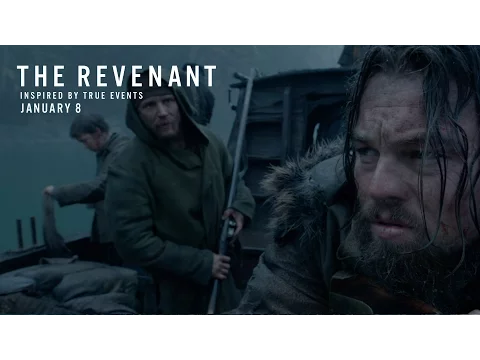
Directed by Alejandro González Iñárritu and starring Leonardo DiCaprio, the film follows Hugh Glass, a frontiersman who is left for dead after a violent bear attack. Injured, isolated, and betrayed by one of his own men, Glass begins an extraordinary journey through the frozen American wilderness.
What starts as a fight for survival gradually becomes a story about revenge, grief, and the determination to stay alive when everything seems impossible.
Warning: Major spoilers ahead.
The Story
The movie takes place in the early 19th century, when fur trappers and hunters are traveling through the American wilderness.
Hugh Glass works as a guide for a group of trappers led by Captain Andrew Henry. Glass knows the land and has a deep connection to the wilderness.
During an expedition, the group is suddenly attacked by a group of Native American warriors.
The survivors escape, but their problems are only beginning.
While scouting ahead of the group, Glass encounters a grizzly bear.
The attack is brutal.
Glass is severely injured and barely survives.
He is unable to walk and can hardly defend himself.
Captain Henry realizes that Glass cannot travel with the group.
Rather than abandoning him completely, Henry chooses to leave several men behind to care for him until they can safely move him.
Among them is John Fitzgerald.
And Fitzgerald has no intention of waiting around.
Fitzgerald's Betrayal
Fitzgerald believes Glass is going to die anyway.
He argues that staying with him puts the rest of the group at risk.
Glass's son, Hawk, refuses to leave his father.
Captain Henry eventually agrees to pay Fitzgerald to remain behind with Glass.
But Fitzgerald becomes increasingly impatient.
When Glass's condition appears to worsen, Fitzgerald decides to finish the job.
Hawk discovers what Fitzgerald is doing and tries to stop him.
Fitzgerald kills Hawk.
Glass is forced to watch helplessly.
He cannot move.
He cannot fight.
He cannot protect his son.
Fitzgerald then convinces Bridger, another member of the group, that Glass is already dead.
They abandon him.
Glass is left alone in the wilderness with almost no chance of survival.
But Fitzgerald has made one mistake.
Glass isn't dead.
Glass Crawls Back to Life
Glass eventually regains consciousness.
He is badly injured, freezing, and unable to walk normally.
But the memory of Hawk keeps him moving.
His goal becomes simple.
Find Fitzgerald.
Get revenge.
Glass begins crawling through the wilderness.
He crosses rivers, mountains, forests, and snow-covered landscapes while trying to stay alive.
His journey is not realistic in the ordinary sense.
The film deliberately presents his survival as almost impossible.
But that is the point.
Glass isn't supposed to be capable of doing what he does.
He simply refuses to stop.
The Wilderness
The environment is one of the most important characters in The Revenant.
The wilderness is beautiful, but it is also constantly threatening Glass.
The cold can kill him.
Starvation can kill him.
Infections can kill him.
Wild animals can kill him.
And there are still hostile people around him.
The movie doesn't make nature feel peaceful.
It feels indifferent.
Glass isn't fighting against a villain every second.
He is fighting against the world itself.
This makes his journey feel exhausting.
Every mile he travels seems to require an enormous amount of effort.
Glass and His Son
Hawk is central to Glass's motivation.
Their relationship is also connected to Glass's memories of his past.
Glass carries enormous grief, and Hawk represents the family he has lost.
After Hawk's death, revenge becomes the thing keeping Glass alive.
He isn't simply trying to survive anymore.
He wants Fitzgerald to face the consequences of what he did.
This makes Glass's journey deeply personal.
Without Hawk, Glass has very little left.
But that loss also gives him a reason to continue.
Glass Meets Other Survivors
During his journey, Glass encounters other people.
One of the most important is a Native American man named Hikuc.
Hikuc is also trying to survive in the wilderness.
Instead of treating Glass as an enemy, he helps him.
He gives Glass food, shelter, and assistance.
Their brief relationship is important because it shows that the world Glass is traveling through isn't divided simply between good and evil.
Glass has enemies.
He also finds unexpected kindness.
Fitzgerald's Escape
While Glass is struggling to survive, Fitzgerald returns to the larger group.
He tries to hide what happened.
Eventually, the truth begins to emerge.
Captain Henry realizes that Fitzgerald lied about Glass's death.
Henry becomes determined to find Glass and Fitzgerald.
Fitzgerald, however, runs.
He is motivated by survival just as much as Glass is.
The difference is that Fitzgerald is willing to sacrifice other people to save himself.
His actions eventually lead him toward the confrontation Glass has been pursuing.
The Final Confrontation
Glass finally catches up with Fitzgerald.
The two men confront each other in the wilderness.
Glass is exhausted and badly damaged, but his hatred has carried him this far.
Fitzgerald attempts to fight back.
The confrontation becomes violent and desperate.
Glass eventually gains the upper hand.
But something unexpected happens.
Glass remembers something important.
Revenge may not actually give him the peace he wants.
Instead of immediately killing Fitzgerald himself, Glass leaves the decision to his enemies.
Fitzgerald is ultimately killed by Native American warriors.
Glass watches.
His revenge is complete, but it doesn't feel like a victory.
What Does the Ending Mean?
The final moments are deliberately quiet.
Glass has spent the entire movie chasing Fitzgerald.
He believed killing the man responsible for Hawk's death would somehow give meaning to his suffering.
But when Fitzgerald finally dies, Glass doesn't suddenly become happy.
His son is still gone.
His wounds are still there.
His memories remain.
Revenge cannot undo what happened.
The movie therefore leaves Glass in a strange emotional place.
He survived.
He achieved what he wanted.
But survival doesn't mean that his pain has disappeared.
The Meaning of the Bear Attack
The bear attack is one of the film's most memorable sequences, but it also has a symbolic purpose.
Glass survives something that should have killed him.
Later, he survives exposure, starvation, injuries, and violence.
The bear attack becomes the beginning of his transformation.
Before it, Glass is a guide and father trying to survive in a dangerous world.
After it, he becomes almost completely driven by survival.
The attack also establishes one of the movie's central ideas:
The human instinct to survive can be incredibly powerful.
Leonardo DiCaprio's Performance
Leonardo DiCaprio's performance is one of the film's biggest strengths.
Glass spends long periods of the movie unable to speak or barely able to move.
That means DiCaprio has to communicate much of the character's suffering physically.
His breathing, facial expressions, movement, and body language carry scenes that contain very little dialogue.
The performance makes Glass's journey feel painful and exhausting.
It is less about traditional action-hero toughness and more about endurance.
What Works Best
The cinematography is one of the most impressive aspects of The Revenant.
The wilderness is captured on a massive scale, making the characters appear tiny compared with their surroundings.
The natural light and long takes also make many scenes feel unusually immersive.
The movie's sound design contributes to this effect.
Breathing, wind, footsteps, water, and distant sounds often become more important than music.
This makes the wilderness feel alive.
What Doesn't Work as Well
The movie is deliberately slow and extremely bleak.
There are long stretches where very little dialogue is spoken.
Some viewers may find the pacing exhausting, especially because the film spends so much time focusing on Glass's suffering.
The story is also relatively simple beneath its complex presentation.
At its core, it is a survival and revenge story.
The filmmaking makes that simple story feel much larger and more intense, but the basic motivation remains straightforward.
Final Thoughts
The Revenant is ultimately a story about survival.
Glass loses almost everything.
He is attacked by a bear, abandoned by his companions, forced to survive in brutal conditions, and devastated by the death of his son.
Yet he continues moving.
His journey is powered by grief and revenge, but it eventually becomes something more complicated.
When Fitzgerald finally dies, Glass doesn't get his life back.
He doesn't get Hawk back.
He simply survives.
And that may be the movie's most important idea.
Sometimes surviving is not the same as winning.
Glass spends the entire film trying to defeat the person who destroyed his life. By the end, he discovers that revenge cannot undo the past.
It can only bring the chase to an end.
Final Verdict – The Revenant is a visually stunning and brutally immersive survival drama powered by Leonardo DiCaprio's physical performance. Its slow pace and relentless darkness won't be for everyone, but its atmosphere, cinematography, and exploration of survival and revenge make it an unforgettable experience.


Explore More