
The Last House (2026) Movie Review: A Family Trapped Inside as the World Disappears
The Last House (2026) follows a family trapped inside their home for years as endless rain, mysterious creatures, and a changing world threaten their survival. Here's a look at the story, characters, creatures, ending, and the movie's central themes.
MOVIE
Popkorn Hub
8/13/20267 min read


The Last House (2026) Movie Review: A Family Trapped Inside as the World Disappears
The Last House (2026) is a tense sci-fi horror thriller that takes a terrifyingly simple idea and stretches it into a story about survival, family, and humanity's relationship with the world around it.
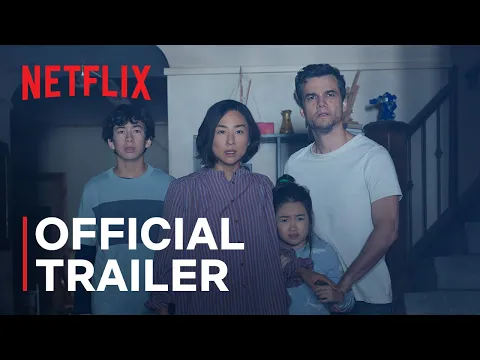
Directed by Louis Leterrier and starring Greta Lee and Wagner Moura, the movie follows a family of four who suddenly discover that they cannot leave their home. The doors and windows refuse to open, while endless rain and a mysterious force outside make the world beyond their house increasingly dangerous.
What begins as a strange situation gradually becomes a long-term fight for survival.
The family has food.
They have water.
They have a home.
But they have no way out.
And whatever is keeping them trapped doesn't seem interested in letting them leave.
Warning: Major spoilers ahead.
The Family Becomes Trapped
The movie begins by introducing Jason and Ann and their children, Graham and Ruth.
Their ordinary family life is suddenly interrupted when they realize something is wrong with their house.
The doors won't open.
The windows cannot be used as exits.
Outside, an unnatural amount of rain continues to fall.
At first, the family believes the situation might be temporary.
They wait.
They test different exits.
They try to understand what is happening.
But eventually, it becomes clear that they aren't simply stuck inside their house.
They are being kept there.
The family's home becomes both their shelter and their prison.
A New Kind of Apocalypse
Instead of showing an apocalypse through cities being destroyed or huge battles, The Last House keeps its focus on one family.
This makes the disaster feel strangely personal.
The family doesn't know exactly what has happened to the rest of the world.
They can only observe what is happening outside their windows.
The rain never seems to stop.
Resources begin to become more important.
Food must be preserved.
Water must be managed.
The family eventually has to find ways to grow food and adapt to their new existence.
The movie gradually moves from short-term survival to something much larger.
Years pass.
The house changes.
The family changes.
And the world outside changes with them.
The Mystery Outside
One of the movie's biggest strengths is how long it keeps the threat mysterious.
The family knows something is responsible for their imprisonment, but they don't immediately understand what it is.
Strange creatures appear outside.
The family refers to the threat in different ways as they try to understand what they are seeing.
The creatures seem connected to the water and the strange environmental changes surrounding the house.
Rather than behaving like ordinary monsters, they appear to be part of a much larger force.
This makes the movie feel closer to cosmic or supernatural horror than a traditional creature feature.
Five Years of Survival
The story eventually reveals how long the family has been trapped.
Five years have passed.
The children have grown up inside the house.
What began as an emergency has become their entire world.
This is one of the movie's most interesting ideas.
For the children, the outside world becomes almost mythical.
They know that another world existed before the rain, but they have spent so much time inside that they have adapted to confinement.
The family creates routines.
They grow food.
They maintain the house.
They try to keep some sense of normal life alive.
But the psychological pressure continues building.
The Loss of Cassidy
The family dog, Cassidy, becomes an important emotional part of their story.
As the years pass, Cassidy's health deteriorates.
Eventually, the family loses the dog because they cannot obtain the medication needed to keep Cassidy alive.
The loss is devastating.
It also demonstrates how brutal their situation has become.
They aren't simply worried about escaping anymore.
They are living in a world where even basic medical supplies are impossible to replace.
The family has to accept losses that would have been preventable in their old life.
Cassidy's death becomes another reminder that their survival has a cost.
Ruth Gets Sick
The situation becomes even more desperate when Ruth becomes infected with rabies.
Without access to proper medicine, the family has a serious problem.
They cannot simply go to a hospital.
There may not even be functioning hospitals anymore.
Jason and Ann have to consider leaving their supposedly safe home to find antibiotics.
This is exactly what the force outside seems designed to prevent.
The family has spent years trying to remain hidden and protected.
Now they have to risk everything.
The Sewer Plan
The family eventually discovers a possible way to move beyond the house through the sewer system.
It's dangerous and uncertain, but Ruth's condition leaves them little choice.
Jason and Ann decide that finding medicine is worth the risk.
Their attempt, however, alerts the creatures.
The family learns that the force outside is much more aware of them than they had hoped.
The house may have seemed like a prison, but it was also protecting them from an even more dangerous world.
The Creatures
The creatures are eventually revealed to be aquatic beings connected to the mysterious changes happening to Earth.
Their presence helps explain why the world outside has become so flooded and hostile.
But the movie doesn't treat them as simple monsters.
They appear to have intelligence.
They communicate through behavior.
And, most importantly, they seem capable of making choices.
This becomes crucial during the final act.
The family eventually captures one of the creatures instead of simply trying to kill it.
For the first time, they have something that might allow them to understand their enemy.
The Turning Point
The family discovers that they may have misunderstood the creatures.
The beings aren't simply hunting humans for food.
They appear to be enforcing a new order on Earth.
Humanity's old dominance has been challenged.
The creatures have taken control of the environment, while humans have been confined to their homes.
This creates an interesting reversal.
Humans once controlled the planet and kept animals contained.
Now humans are the ones being contained.
The family is essentially experiencing the world from the perspective of something that has lost control of its own environment.
Ruth's Compassion
The most important moment of the final act comes from Ruth.
While Jason is prepared to treat the creature as an enemy, Ruth responds differently.
She shows compassion.
Instead of killing the creature, she recognizes that it may not be fundamentally different from them.
That decision changes everything.
The creature responds to her mercy by allowing the family to leave.
The movie therefore makes compassion the key to survival.
The family doesn't escape because they overpower the creatures.
They escape because they demonstrate that humans are capable of coexistence.
The House Falls
After the family finally leaves, their old home is flooded and collapses.
The place that had been their prison for years is destroyed.
This moment has obvious symbolic meaning.
The house represented their old life.
It protected them, but it also trapped them.
Once they leave, there is no going back.
The destruction of the house therefore marks the end of one chapter and the beginning of another.
The family is finally free.
But freedom doesn't mean the old world has returned.
The Boat
The family escapes using a neighbor's boat.
They rename it Cassidy, after their dog.
That small detail gives the ending an emotional connection to everything they have lost.
Cassidy represents the family members, memories, and old life that cannot come with them.
But the name allows them to carry one piece of that past into their future.
They leave the ruined house behind and begin searching for other survivors.
The Final Radio Message
The family eventually uses a radio to send a message.
For most of the movie, they have no idea whether anyone else is still alive.
Then they receive a response.
Someone is out there.
This changes the ending from pure survival to hope.
The family isn't necessarily alone.
There may be other survivors who have adapted to the new world.
The film ends without giving a complete picture of what comes next.
That uncertainty is intentional.
The family has escaped one prison.
Now they have to discover what kind of world exists beyond it.
What Does the Ending Mean?
The ending of The Last House can be interpreted as a story about adaptation.
The family spends years trying to preserve the world they knew.
They want their house to remain a safe place.
They want the outside world to return to normal.
But normal never comes back.
Instead, they have to change.
The creatures have changed the planet.
The family changes with it.
And Ruth's compassion suggests that surviving the new world may require something different from simply fighting everything they don't understand.
The Movie's Biggest Idea
One of the most interesting themes is the reversal of power.
Humans are accustomed to controlling nature.
We build houses.
We create barriers.
We keep animals in controlled environments.
But The Last House reverses that relationship.
Now humans are confined while another species controls the environment outside.
The family becomes almost like animals inside an enclosure.
The question becomes whether humanity can accept that it is no longer automatically in control.
What Works Best
The movie's strongest element is its premise.
The idea of a family being trapped inside their own home is immediately understandable and frightening.
The long passage of time also makes the story more interesting.
Instead of focusing only on the initial panic, the movie explores what happens when imprisonment becomes normal.
Greta Lee and Wagner Moura give the family emotional weight, particularly during the moments when survival choices become morally difficult.
The movie also benefits from keeping the threat mysterious for much of its runtime.
What Doesn't Work as Well
The movie's final explanation may feel less satisfying to viewers who want every mystery answered.
The creatures' abilities and motivations leave room for interpretation.
Some viewers may also find the transition from contained survival horror to large-scale sci-fi mythology abrupt.
The first part of the film creates a very intimate sense of fear, while the final act expands the story into something much larger.
That shift won't work for everyone.
Final Thoughts
The Last House begins with a simple nightmare:
What if you couldn't leave your home?
But the movie gradually turns that idea into a larger story about humanity, survival, adaptation, and compassion.
Jason and Ann spend years trying to protect their family from whatever is outside.
They eventually discover that survival isn't only about keeping danger away.
Sometimes survival requires understanding the thing you fear.
The family loses their home, their old way of life, and Cassidy.
But they gain something they haven't had in years: freedom and the possibility of finding other people.
The final radio response gives the story a hopeful ending.
The old world may be gone.
But the family has survived long enough to see a new one begin.
Final Verdict – The Last House is an atmospheric sci-fi horror thriller built around a strong survival premise. Its biggest strengths are the claustrophobic setup, family drama, mysterious creatures, and emotional ending. While its final explanations may leave some questions unanswered, the movie's central idea remains compelling: when the world changes completely, survival may depend not on controlling it, but on learning how to live in it.


Explore More
PopKorn Hub
Movies. Stories. Moments That Stay.
EXPLORE
© 2026 Popkorn Hub. All rights reserved.
INFORMATION