
Schindler's List (1993) Movie Review: The Man Who Chose to Save Lives
Schindler's List (1993) tells the powerful true story of Oskar Schindler and the Jewish workers he saved during the Holocaust. Here's why Steven Spielberg's historical drama remains unforgettable.
MOVIE


Schindler’s List (1993) Movie Review: The Man Who Chose to Save Lives
First Reaction – Schindler’s List is a devastating and deeply human film about the Holocaust, showing how one man's choices gradually transform him from a businessman looking for profit into someone determined to save as many lives as he can.
Directed by Steven Spielberg, Schindler’s List tells the story of Oskar Schindler, a German businessman who arrives in Kraków during World War II hoping to take advantage of the opportunities created by the war.
What begins as a business venture eventually becomes something far more important.
Schindler finds himself surrounded by persecution, violence, and mass murder. As the situation becomes increasingly horrifying, he begins using his wealth, influence, and connections to protect Jewish workers from being sent to their deaths.
The film is based on the historical story of Oskar Schindler and the Jewish people he helped save during the Holocaust.
Director: Steven Spielberg
Writer: Steven Zaillian
Cast: Liam Neeson, Ben Kingsley, Ralph Fiennes, Caroline Goodall, Jonathan Sagall, Embeth Davidtz
Runtime: 3 Hours 15 Minutes
Genre: Historical Drama, War, Biography
Warning: Major spoilers ahead.
The Story of Schindler's List
The movie begins in Kraków during the Second World War, as Jewish families are forced to register and the Nazi occupation begins changing everyday life.
Oskar Schindler arrives in the city looking for a business opportunity.
He is charming, confident, and comfortable around powerful Nazi officials.
Schindler establishes a factory producing enamelware and employs Jewish workers because their labor is inexpensive.
At this stage, his motivation is primarily financial.
He wants to make money from the war.
His Jewish accountant, Itzhak Stern, becomes an important part of the operation. Stern helps Schindler manage the factory and recruit workers.
The factory gradually becomes a place where Jewish workers have a better chance of surviving.
But Schindler's transformation does not happen immediately.
He witnesses what is happening around him.
And eventually, he can no longer treat the persecution as someone else's problem.
The Kraków Ghetto
The Nazi authorities force Kraków's Jewish population into a restricted area known as the Kraków Ghetto.
The conditions are brutal.
Families are separated, people are imprisoned, and lives are controlled by Nazi officials.
One of the most disturbing characters introduced during this period is Amon Göth, the commandant of the nearby Płaszów concentration camp.
Played by Ralph Fiennes, Göth represents the terrifying unpredictability of Nazi power.
He can kill someone without hesitation and then continue his day as though nothing happened.
His relationship with Schindler becomes particularly important.
Schindler understands that staying close to people like Göth gives him access to power.
But he also begins using that relationship to protect his workers.
The Liquidation of the Ghetto
One of the film's most horrifying sequences occurs when the Nazis liquidate the Kraków Ghetto.
The residents are ordered out of their homes.
People hide.
Families desperately try to survive.
Others are simply executed.
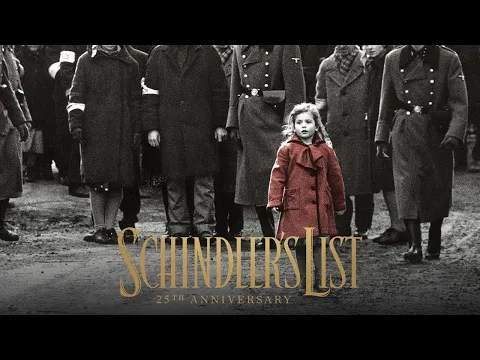
Schindler watches the violence from a distance and sees a young girl wearing a red coat moving through the chaos.
The image stands out against the film's largely black-and-white photography.
The little girl becomes one of the most recognizable images in the movie.
For Schindler, witnessing the liquidation becomes an important turning point.
He realizes that the people working in his factory are not simply employees.
They are human beings whose lives are in danger.
Schindler's Transformation
Schindler's transformation is one of the most important parts of the film.
He begins the story wanting to become wealthy.
He enjoys expensive clothes, restaurants, parties, and the attention of powerful people.
But as he witnesses more suffering, his priorities change.
He begins using his relationships with Nazi officials to keep his workers alive.
Money becomes less important.
Survival becomes the priority.
His factory increasingly functions as a place where Jewish workers can avoid some of the worst dangers of the Nazi persecution.
Schindler also understands that his influence has limits.
He cannot save everyone.
So he begins thinking about how many people he can protect.
The List
The famous list is created when Schindler and Stern begin identifying workers who should be considered essential to his factory.
The workers placed on the list are given a chance to remain employed and avoid being sent somewhere else.
But the list becomes much more than a business document.
It becomes a record of people whose lives Schindler is trying to save.
Each name represents a person.
A parent.
A child.
A husband or wife.
Someone with a life outside the factory.
Schindler understands that getting a person's name onto the list can mean the difference between life and death.
The Factory Becomes a Refuge
As the war progresses, Schindler's factory becomes increasingly important.
He uses his money and influence to protect his workers.
He bribes officials.
He negotiates.
He provides food.
He argues that the workers are necessary for production.
But the audience understands that production isn't really the point anymore.
Schindler is trying to keep people alive.
The man who originally entered Kraków hoping to make a fortune is now spending his fortune to protect people.
That reversal is what makes his story so powerful.
The Train Scene
One of the most memorable moments occurs when Schindler discovers that a group of his workers has been mistakenly placed on a train destined for Auschwitz.
He immediately tries to intervene.
He travels to the authorities and uses everything available to him to get the workers released.
Eventually, the people are brought back.
The sequence demonstrates just how much Schindler's priorities have changed.
Earlier in the movie, he would have viewed such an event as a business problem.
Now, he treats it as a matter of life and death.
The End of the War
As Germany begins losing the war, Schindler realizes that the situation is changing.
The Nazi regime is collapsing.
His workers have survived, but Schindler himself is now in danger because he is a member of the Nazi Party and has been involved in wartime business.
Before leaving, he meets with the workers.
The moment becomes extremely emotional because Schindler knows he is saying goodbye.
The people he helped save thank him.
But Schindler looks at the things he owns and begins thinking about what else he could have done.
The Famous Ending
Schindler becomes overwhelmed by guilt.
He looks at his car.
He thinks about how many more people he might have saved if he had sold it.
He looks at his gold Nazi Party pin and realizes that it could have been exchanged for money.
Then he breaks down.
Schindler says that he could have done more.
The workers reassure him that he has already saved many lives.
But Schindler cannot stop thinking about the people he couldn't save.
This scene is important because Schindler does not see himself as a hero.
He sees the lives he failed to save.
The movie refuses to turn his actions into an uncomplicated victory.
Millions of people were murdered during the Holocaust.
Schindler saved many, but he could not save everyone.
The Survivors
The film then moves from the historical past toward the present.
The surviving Schindler Jews and their descendants appear at Schindler's grave in Jerusalem.
They place stones on his grave as a sign of respect.
Liam Neeson, playing Schindler, appears alongside the real survivors during the final moments.
The transition connects the historical story to the people whose lives continued because of Schindler's actions.
It reminds us that the people on the list were not simply numbers.
They had families.
They had children.
They had futures.
And because they survived, their families continued as well.
What Makes Schindler's List So Powerful?
The greatest strength of Schindler's List is that it doesn't try to make the Holocaust feel like an ordinary war story.
The film focuses heavily on individual people.
We see fear.
Confusion.
Loss.
Desperation.
The violence is often shocking precisely because the movie does not treat it like entertainment.
Spielberg's decision to film most of the movie in black and white gives it the feeling of historical photographs and documentary footage.
The rare use of color makes certain moments especially powerful.
The film's length also allows the story to develop gradually.
We get to see Schindler change rather than simply being told that he became a good person.
Ralph Fiennes as Amon Göth
Ralph Fiennes delivers one of the film's most disturbing performances as Amon Göth.
Göth is frightening because his violence appears completely casual.
He can look out over the camp and decide someone's fate without emotion.
The character represents the terrifying powerlessness of the prisoners.
There are no predictable rules.
Someone can survive one moment and be killed the next.
Fiennes doesn't need constant shouting or dramatic speeches.
His calmness makes Göth even more disturbing.
Final Thoughts
Schindler's List is an extremely difficult film to watch, but its importance comes from the way it tells a huge historical tragedy through individual human lives.
Oskar Schindler begins the story as a businessman looking for profit.
He ends it having sacrificed much of his wealth and influence to save people who otherwise might not have survived.
The film doesn't suggest that one person can erase an atrocity.
Instead, it shows what one person can choose to do when surrounded by people choosing to do the opposite.
Schindler's greatest achievement isn't the factory.
It isn't the money.
It isn't even the list itself.
It is the lives represented by those names.
Every survivor represents a future that would otherwise have disappeared.
And that is why the final scene is so powerful.
The list isn't just a piece of paper.
It is a collection of lives that continued.
Final Verdict – Schindler's List is a heartbreaking, unforgettable historical drama that turns one man's transformation into a powerful reminder of the value of every human life.


Explore More
Explore More